




The doom loop in emerging markets
In this paper, Arellano et al. integrate a standard epidemiological susceptible-infected-recovered model into a sovereign default model in order to study how the epidemic impacts both economic activity and the likelihood of a debt crisis in emerging markets. Governments borrow internationally to smooth consumption during the lockdowns. But lockdowns depress output and lower the prospects of debt repayment. As a result, a highly indebted economy, with a looming debt crisis, chooses a less strict path of lockdowns because of its limited ability to use financial markets to support consumption. This leads to a higher death toll from the epidemic. Their models indicates that:
- Lockdowns reduce output by 19% in present value and generate a debt crisis of 43 months with defaults. The first six months of the crisis feature high default intensity, the country defaults on more than 50% of the debt due; default intensity falls thereafter but remains elevated for 37 more months;
- Debt relief programs can have profound positive effects: debt relief supports consumption, can reduce the severity of the debt crisis, and can save lives.
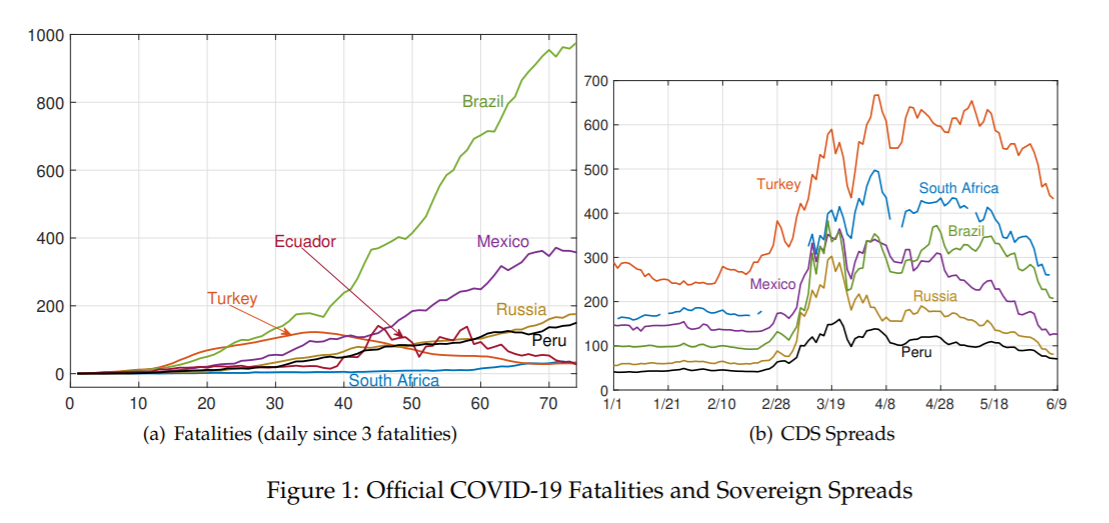
Deadly Debt Crises: COVID-19 in Emerging Markets
Authors: Cristina Arellano, Yan Bai, Gabriel Mihalache
From: University of Minnesota, University of Rochester, Stony Brook University
