What is a confidence multiplier?
How do shifts in aggregate demand drive business cycles? To answer this question, Angeletos and Lian introduce to a New Keynesian model:
- A neoclassical margin for intertemporal substitution on the supply side which allows the aggregate production of today’s goods to be responsive to intertemporal preference shocks, or other shifts in aggregate demand;
- An informational friction, or bounded rationality on the demand side which amplifies these aggregate demand shifts and allows investment and consumption to comove.
They find that as long as consumers confuse aggregate income fluctuations for idiosyncratic ones, a negative aggregate shock causes them to turn pessimistic about their permanent income, even though permanent income is actually fixed.
As consumers lose confidence they also spend less, amplifying the original drop in aggregate demand. This feeds into a further cut in employment and output, a further drop in confidence, and so on. This is the crux of the “confidence multiplier.” Interestingly enough, they also find that in this environment, front-loaded fiscal stimuli crowd in private spending.
Confidence and the Propagation of Demand Shocks
Authors: George-Marios Angeletos, Chen Lian
From: MIT, UC Berkeley
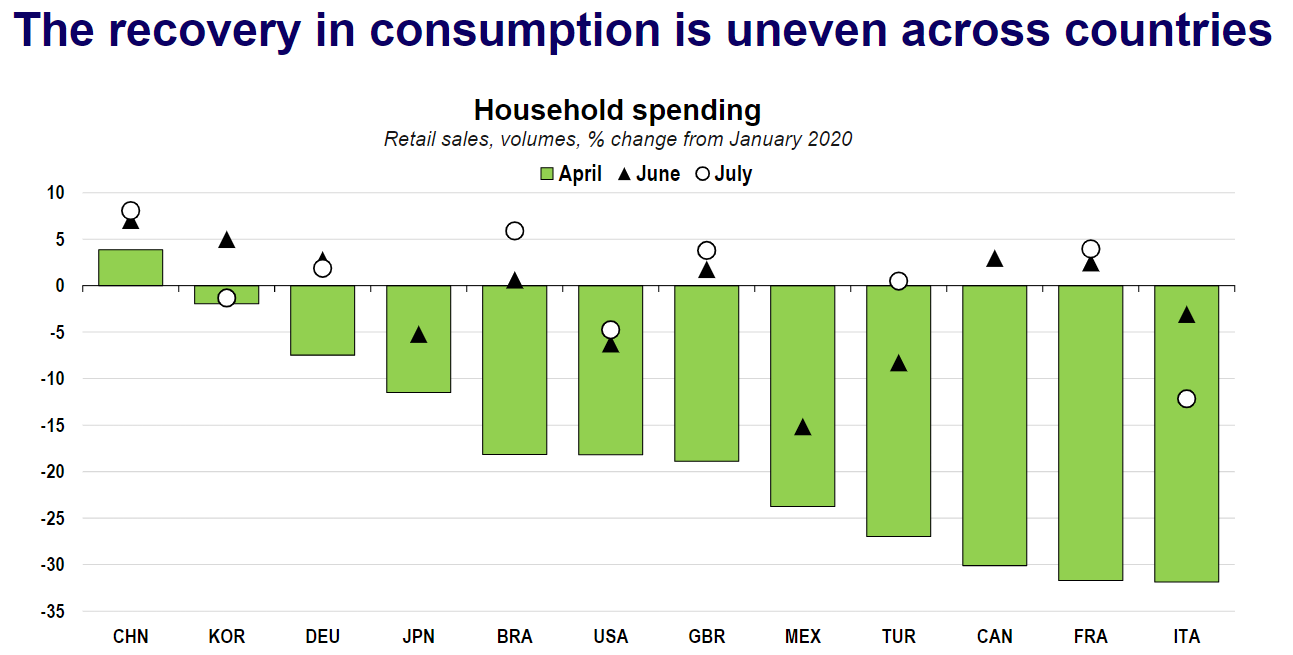
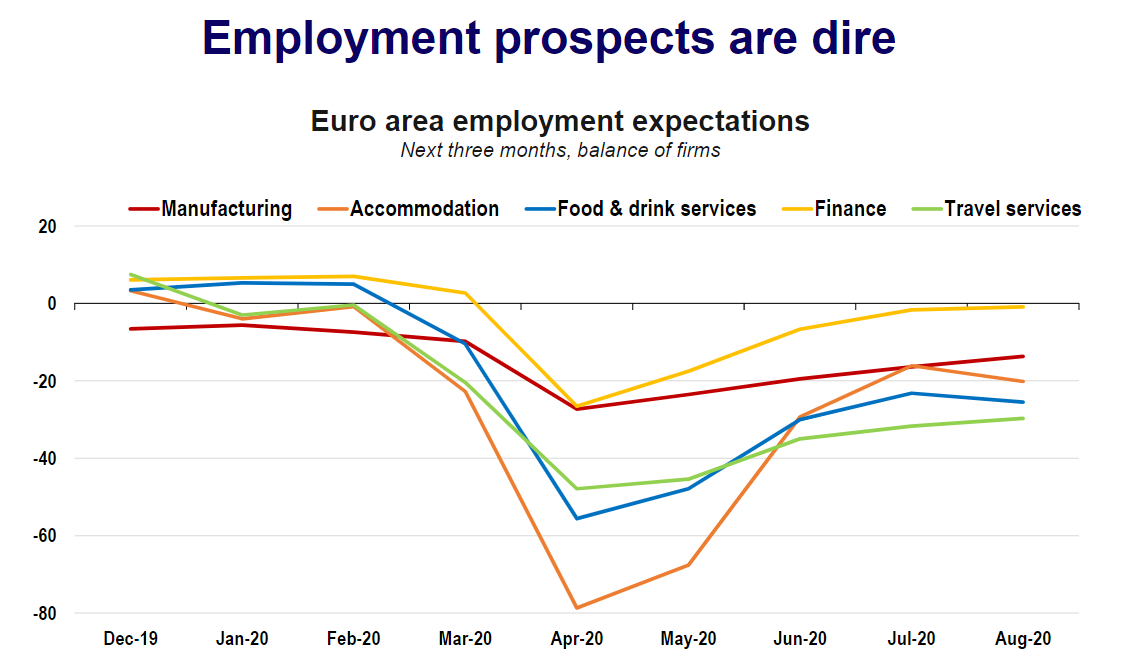
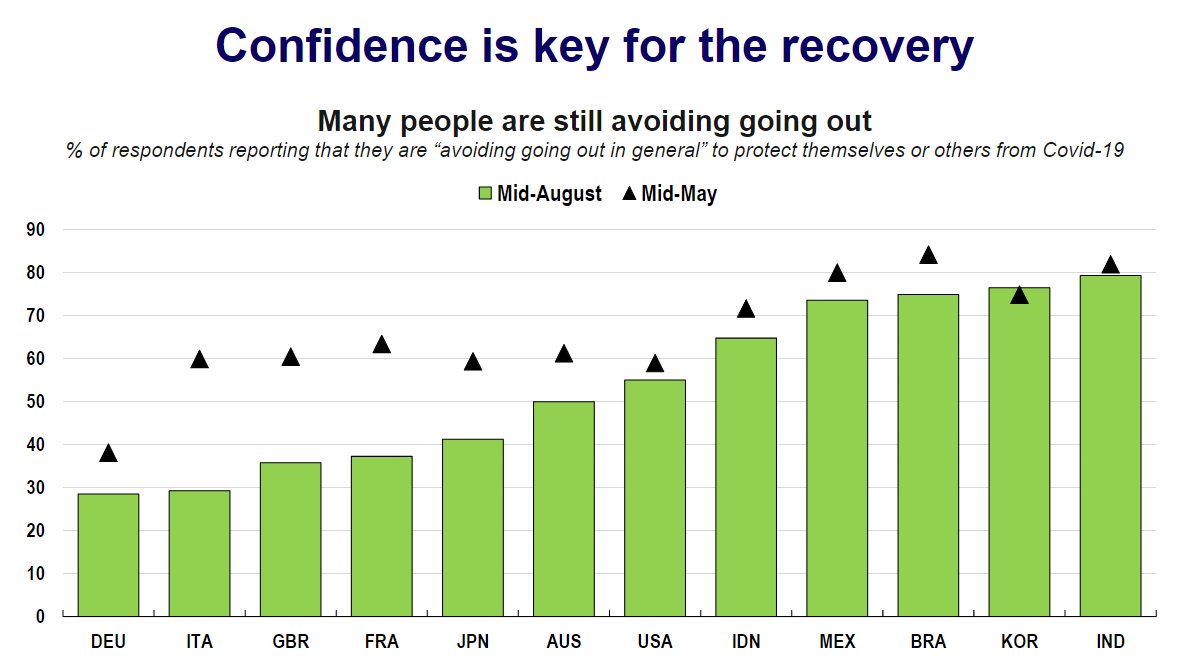
The confidence multiplier at play?
From the OECD’s Interim Economic Outlook:
The outlook remains extraordinarily uncertain and dependent on the virus, policies, people’s behaviour and ultimately confidence.
OECD Interim Economic Outlook – Living with Uncertainty
Authors: Laurence Boone
From: OECD


