



Well-being indicators for the future
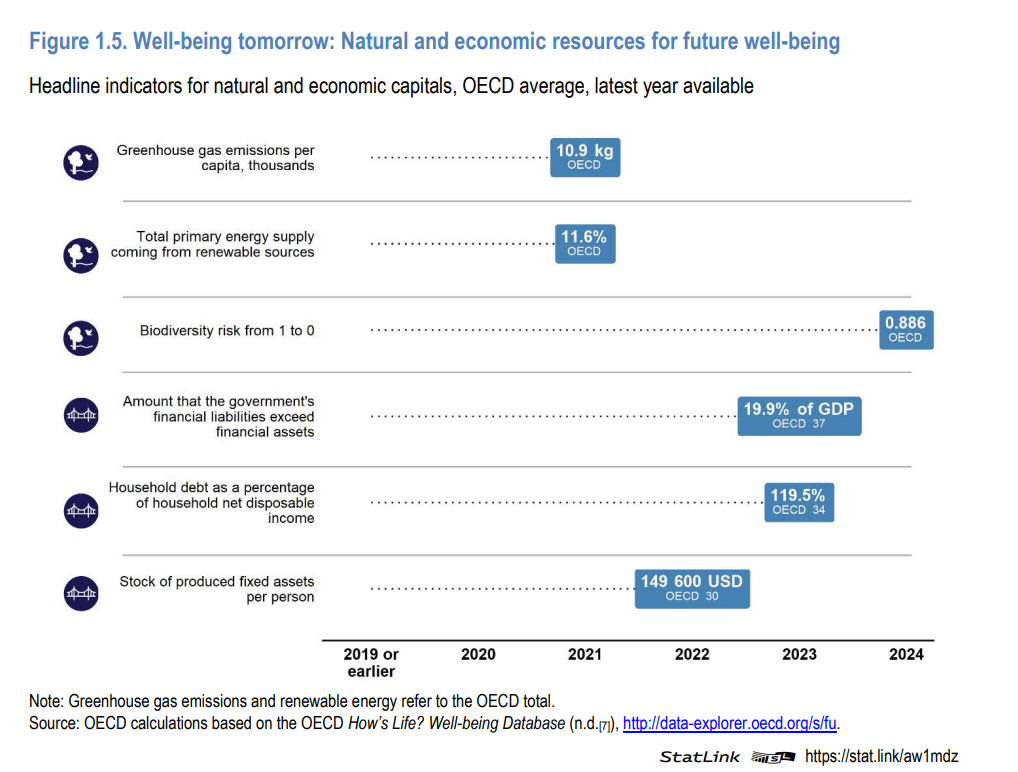
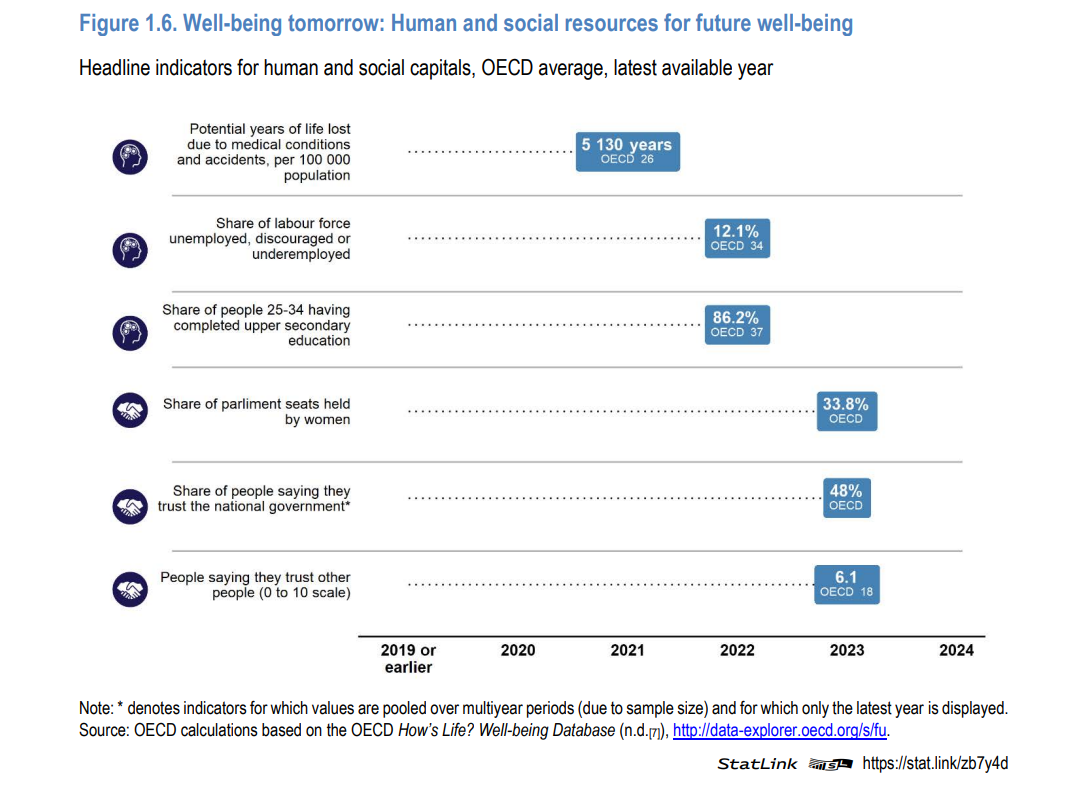
The OECD’s 6th edition of How’s Life? report provides important insights on the sustainability of well-being for the next generation.
- Environmental challenges
No OECD country is on track to meet 2030 climate targets in international agreements, posing significant threats to future generations. Climate impacts are already increasing, with approximately 15% of people across OECD countries exposed to extreme heat in 2023, up from 13% in the 2010s. Progress in preserving natural resources appears to be plateauing, with slowing improvements in recycling rates and protected area creation. Biodiversity risks have increased in most OECD countries, threatening ecosystem resilience. - Social capital and education concerns
The report identifies concerning trends in social and human capital. Trust in government has declined in some OECD countries, while other social capital indicators like interpersonal trust show no improvement. Educational outcomes have deteriorated, with PISA results declining in nearly all OECD countries. These educational gaps significantly impact future well-being prospects, as individuals with tertiary education consistently outperform those with less education across all well-being dimensions. - Managing major transitions
Future generations will inherit societies undergoing simultaneous technological and environmental transitions. While digitalization and AI offer new opportunities, they also present challenges that must be managed alongside the green transition. The report emphasizes that understanding the social context of these changes is essential for developing policies that enhance rather than undermine future well-being. - Policy direction for sustainable well-being
To promote sustainable well-being within planetary boundaries, policies must facilitate significant behavioral changes in lifestyles and consumption patterns. Shifting emphasis from material consumption toward social well-being can strengthen societies by fostering purpose and belonging. This requires collective action beyond government, involving community-level initiatives and corporate responsibility in preserving the natural, human, and social capital future generations will depend upon.
How’s Life? 2024
By: OECD
Pessimism about the well-being of the next generation
A recent survey by the Pew Research Center in Washington, DC. looks at people’s expectations of next generation’s financial future.
Most say children will be worse off than their parents. A median of 57 percent of respondents share this view. Concern is especially high in advanced economies, including Canada and the United States and many European nations. “This pessimistic view about the economic future is shared by younger and older adults alike, as well as by people with higher and lower incomes.
According to Pew:
In most countries, people who consider the gap between the rich and the poor to be a very big problem are especially pessimistic about how children will fare financially when they grow up.
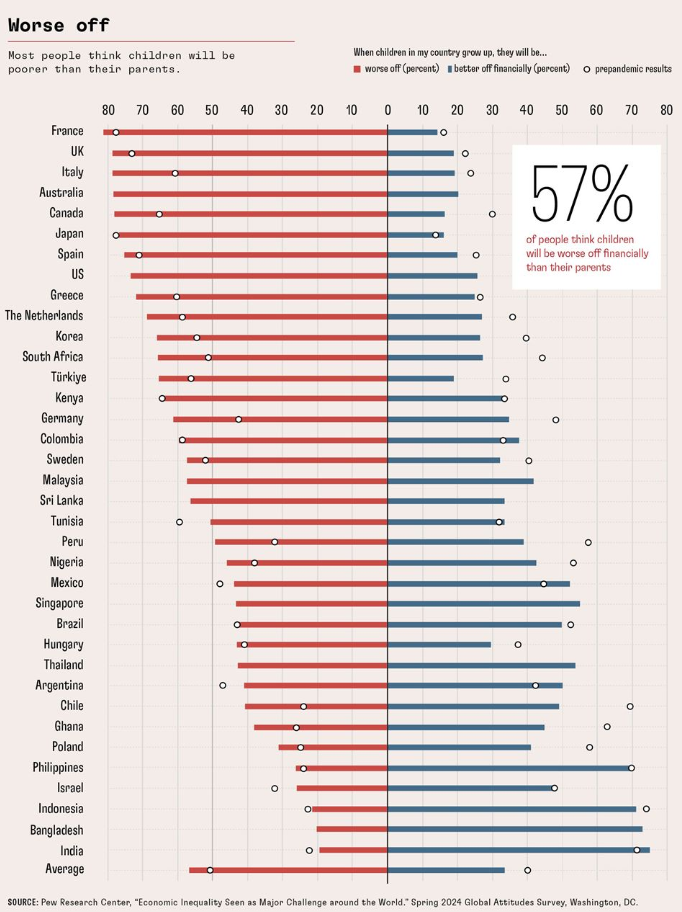
People in many countries are losing hope that children will be better off
Author: Marta Doroszczyk
From: IMF
