



The economic issues with providing reserves to the financial sector
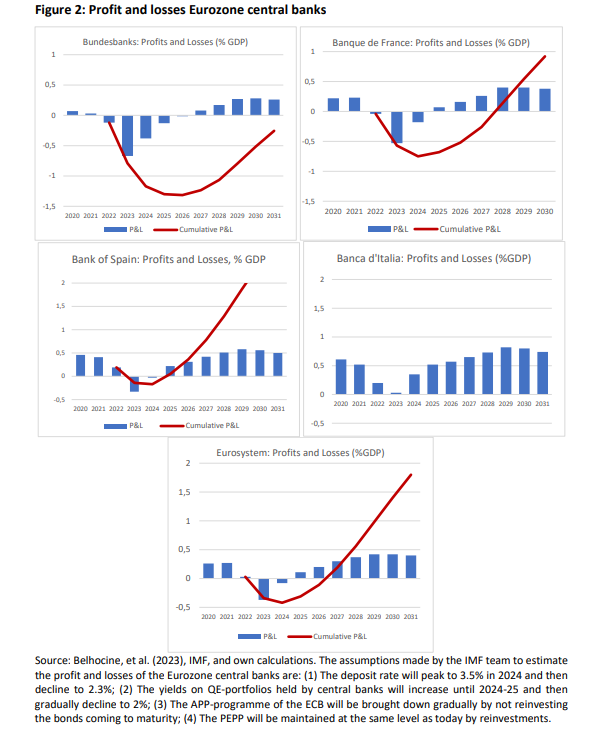
In this paper De Grauwe and Ji raise concerns over central banks’ recent policy of renumerating bank reserves. Focusing on the Eurozone, they find that bank reserves held by credit institutions at the national central banks and the ECB amounted to €3.6 trillion in August 2023. In September 2023 the remuneration rate on these bank reserves held by commercial banks was raised to 4%. This means that the Eurosystem is paying out €146 billion in interest to credit institutions as of September 2023, every year. Consequences for central banks and commercial banks:
- When a central bank makes interest payments to commercial banks it transfers part of its profits to the banking sector. Central banks make a profit (seigniorage) because they have obtained a monopoly from the state to create money. This monopoly profit should therefore be returned to the government that has granted the monopoly rights.
- The remuneration of reserves reduces the incentives banks have to hedge their interest rate risk while it strengthens the equity position of reserve-rich banks, thereby giving them incentives to increase the loan supply and weakening the transmission of monetary policy.
- These reserve remunerations are so high that not only do they wipe out central banks’ profits, but they also push many of them into loss-making territory.
- Large reserves must be backed by assets, mostly government bonds that have been issued at very low-interest rates. By paying an interest rate of 4% (Eurozone) to 5.15% (US) on bank reserves central banks are reducing government revenues by the same amount.
We proposed to use a system of two-tier minimum reserve requirements. This consists of freezing part of the existing bank reserves in non-interest-bearing deposits while remunerating the reserves in excess of these minimum requirements. This achieves two things. It allows for a drastic reduction in the transfer of central banks’ profits to private agents, and it makes it possible for the central banks to maintain their current operating procedure.
Fighting Inflation More Effectively Without Transferring Central Banks’ Profits to Banks
Authors: Paul De Grauwe, Yuemei Ji
From: LSE, University College London
