The current state of the Chinese economy
- Sluggish domestic demand and real estate Slump
China’s economy continues to struggle with weak consumer spending and a prolonged downturn in the real estate sector. Despite some recent signs of stabilization in large cities, property prices have dropped 20-30% since 2021, and oversupply remains a significant issue, especially in smaller cities. Demographic trends—such as a shrinking first-time homebuyer cohort—suggest that housing demand will remain subdued for years.
- Trade war and tariff uncertainty
The unpredictable trade war with the United States remains a major risk. Recent hikes brought tariffs to extremely high levels (145% and 125%), threatening to severely disrupt bilateral trade. However, a tentative agreement in Geneva in early May 2025 rolled back most tariff increases for 90 days and restarted trade talks, providing temporary relief for both sides.
- Stimulus-driven growth and policy measures
– China’s economy had a strong start to 2025, with Q1 GDP growing 5.4% year-on-year, largely due to robust exports and extensive government stimulus measures. These included fiscal, monetary, and real estate sector support—such as interest rate cuts, lower reserve requirements for banks, and expanded lending programs.
– Despite the headline growth, much of the momentum is attributed to front-loaded exports ahead of new tariffs, raising concerns about sustainability. Underlying domestic demand remains weak, with deflationary pressures and cautious consumer behavior.
- Fiscal and monetary constraints
The government has increased the fiscal deficit to support growth, but official figures understate the true scale of public borrowing. When off-balance-sheet and local government debts are included, the deficit is estimated at 8.5-9% of GDP for 2025. Tax revenues are declining due to weak economic activity and low inflation, limiting the government’s options for further stimulus.
- Challenges in boosting consumption
Efforts to increase consumption—such as tax cuts, vouchers, and trade-in programs—have had limited impact. The consumption share of GDP remains low (around 40%), far below advanced economies and China’s peer group, and there have been few significant new initiatives to address this.
- Outlook and risks
While the economy is currently buoyed by stimulus and strong exports, momentum is expected to fade as the year progresses. Full-year growth is forecast to be between 4.5% and 5%, with risks tilted to the downside if export strength wanes or trade tensions re-escalate. The government may need to introduce further stimulus to maintain growth targets.
How is China’s economy faring?
By: George Magnus – Oxford University
Don’t underestimate China’s tech power amid economic woes
In this RAND commentary Gerard DiPippo argues that China’s current economic situation is defined by a striking paradox: while the overall economy is slowing, as described above, its high-tech industries are thriving and gaining global prominence.
- High-tech growth: High-tech manufacturing and IT services are expanding rapidly, outpacing overall GDP growth. China leads in exports of advanced products like electric vehicles, batteries, and solar panels. However, these sectors are still a small share of GDP and exports: they are estimated to be less than 20 percent of GDP and accounted for 26 percent of China’s total exports from 2022 to 2024.
- Policy and leadership: President Xi Jinping’s policies have prioritized technological self-reliance and innovation over stimulating traditional economic growth. Efforts to control property sector debt were poorly managed, and support for entrepreneurs has been inconsistent.
Given the size of China’s competitive market, the state’s ownership of much of China’s financial sector, and investors’ willingness to crowd into priority sectors (and away from politically unfavored sectors), there’s plenty of money for high-tech Chinese firms to succeed.

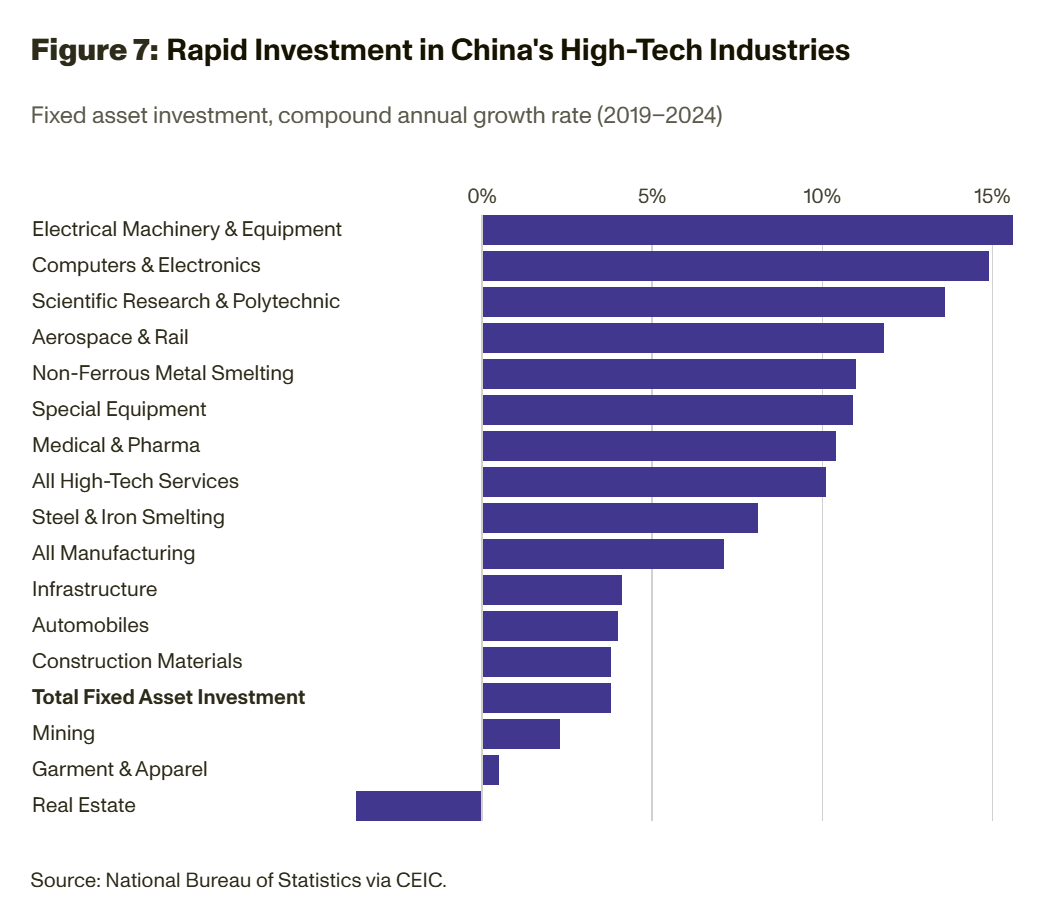
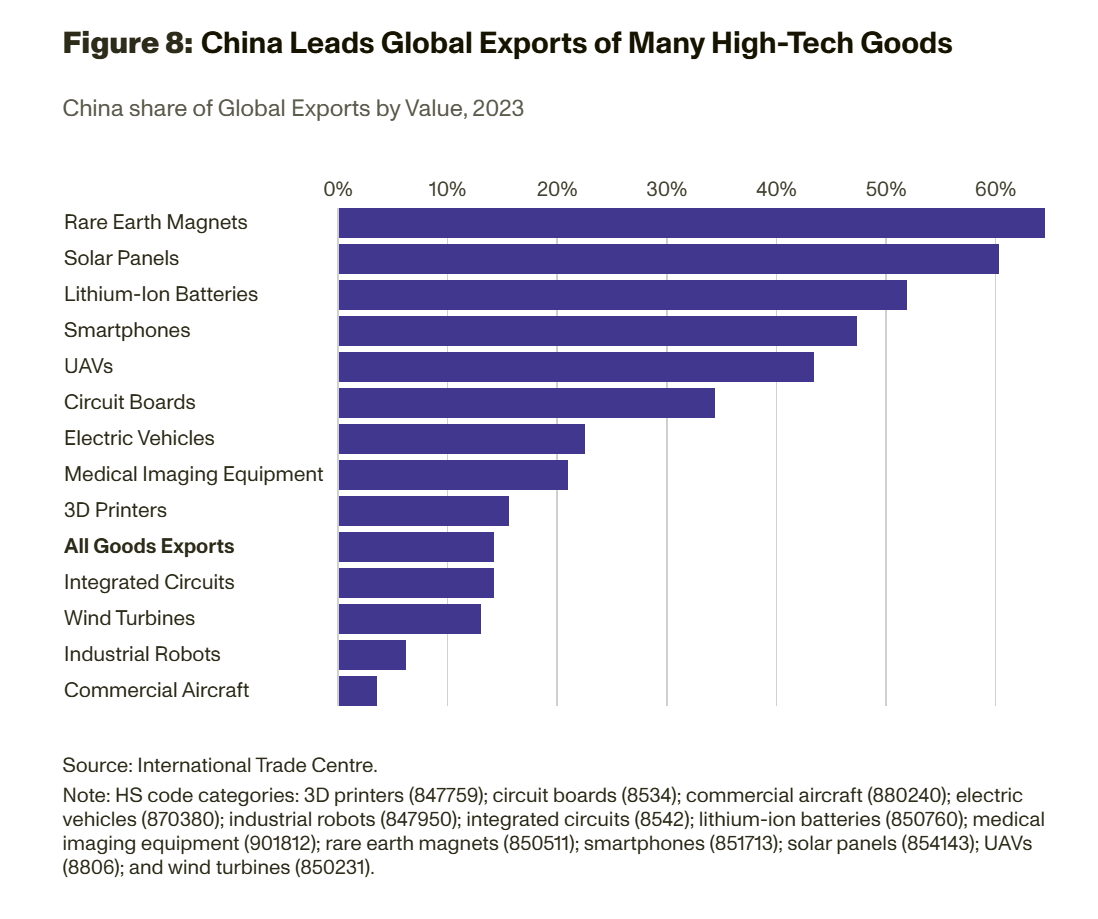

Focus on the New Economy, Not the Old: Why China’s Economic Slowdown Understates Gains
By: Gerard DiPippo – RAND