


COVID-19 will exacerbate imbalances
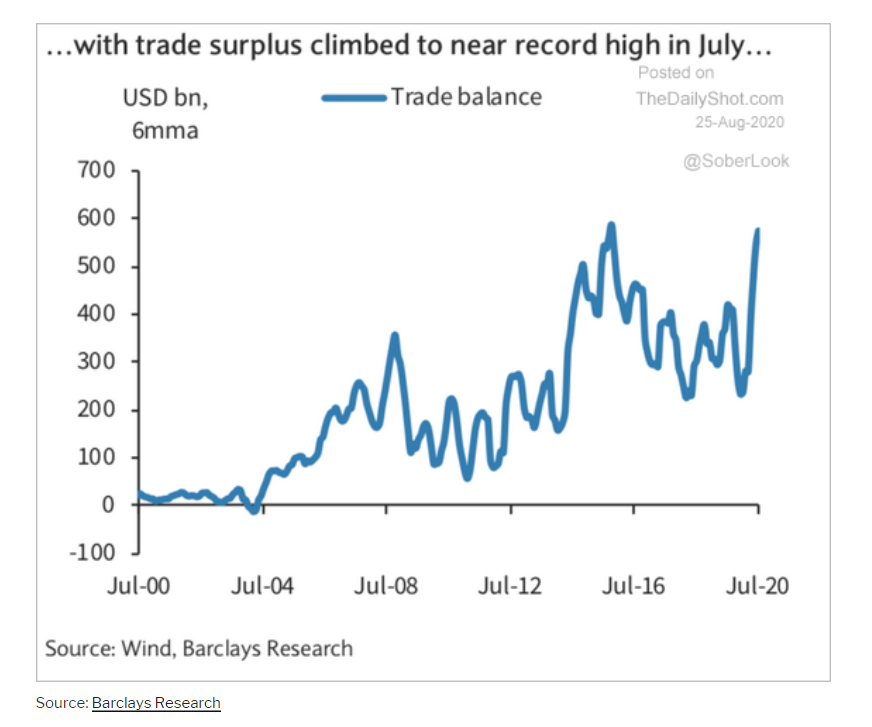
Michael Pettis, of Peking University, has argued that China’s policy-response to Covid-19 was mostly supply-side rather than demand-side, the result had to be some combination of soaring trade surpluses (bad for the world) and soaring public-sector investment (bad for the Chinese debt burden). He expects China’s 2020 current account surplus to be twice the IMF’s most recent projection (1.7% of GDP). China’s rapid “recovery”, in other words, was in production, and not in demand, and came at the expense of both global demand and China’s debt burden.
Global imbalances and safe assets at the zero lower bound
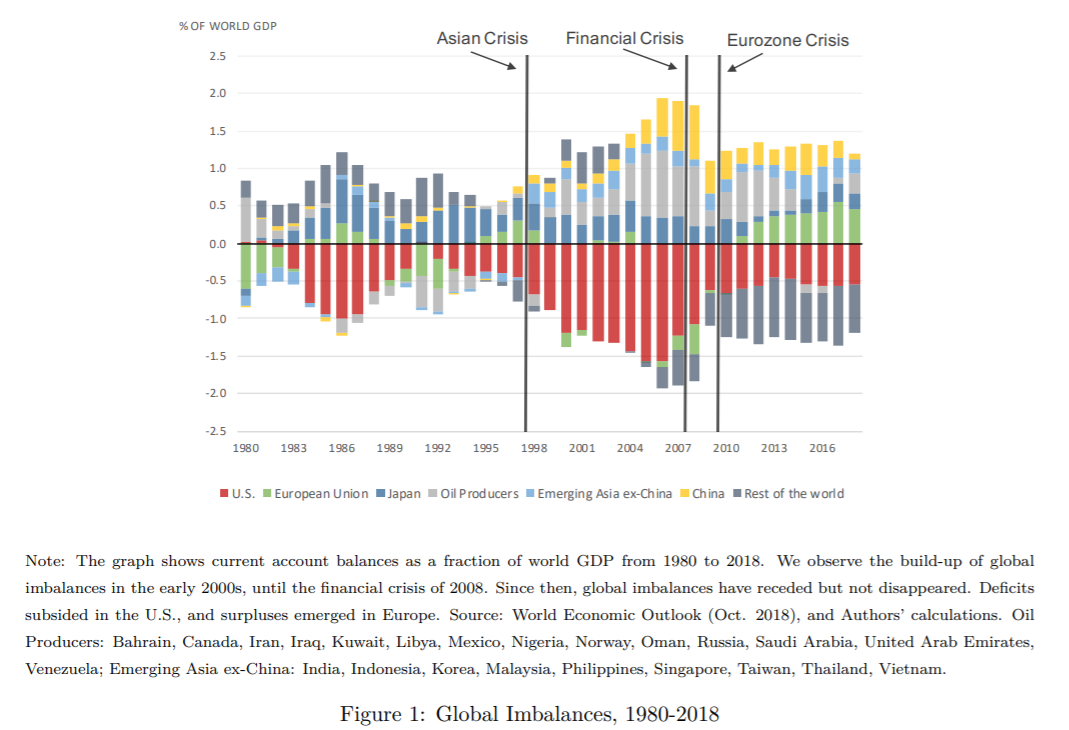
World interest rates and global imbalances go hand in hand: Countries with large safe asset shortages run Current Account surpluses and push the world interest rate down. At the ZLB, the global asset market remains in disequilibrium when output is at its potential: the resulting global (safe) asset shortage cannot be resolved by lower world interest rates. It is instead alleviated by a world recession, which is propagated by global imbalances: Current Account surplus countries push world output down, exerting a negative effect on the world economy. Exchange rate policy becomes a zero-sum game of currency wars where each country can depreciate its exchange rate to stimulate its economy, at the expense of other countries. The same logic and incentives hold for tariffs on foreign goods. In contrast, safe public debt issuances, increases in government spending, and support for private securitization are positive-sum and stimulate output in all countries.
Global Imbalances and Policy Wars at the Zero Lower Bound
Authors: Ricardo J. Caballero, Emmanuel Farhi, Pierre-Olivier Gourinchas
By: MIT, Harvard University, Berkeley
