


Fed vs. ECB: The divergent approaches to climate change mitigation
In this paper, DiLeo et al. develop a theoretical framework to describe how the domestic context and international norms influence the evolution of central bank policymaking. In particular, they analyze the adoption of climate-related norms by central banks as a two-stage process:
- The first stage is one of “norm emergence” where government actors, think tanks and nongovernmental organizations (NGOs) try to convince individual central banks to adopt basic climate-related norms. This was a successful process in Europe as these “norm entrepreneurs” convinced the ECB to adopt basic climate-related norms. In the case of the Fed, the socio-political environment on climate action was highly fractious and norm entrepreneurs targeting the Fed were absent.
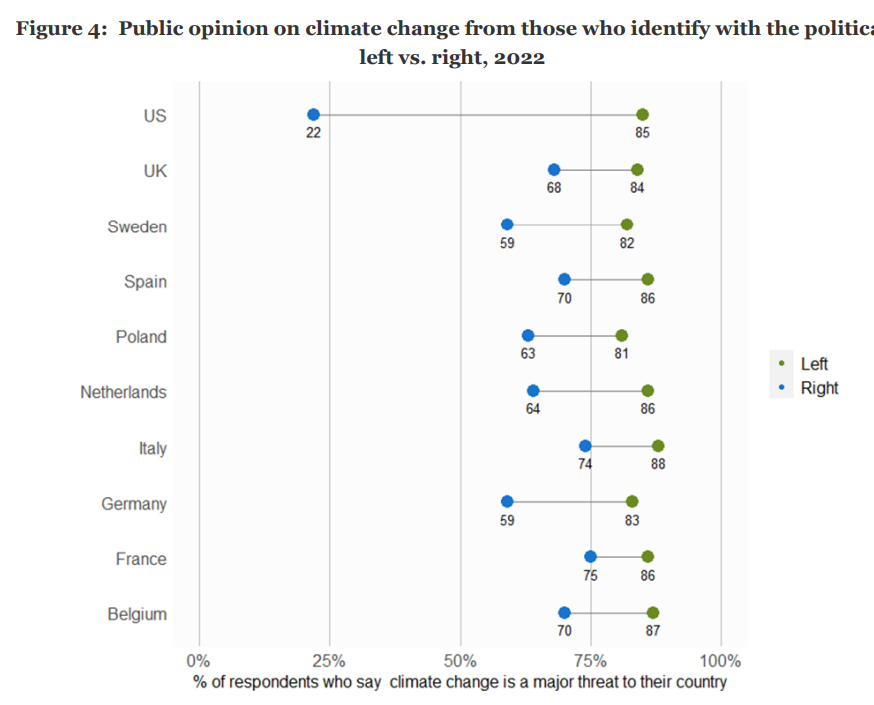
- The second phase is one of “norm cascade,” where a critical mass of early NGFS members started to spread these new climate norms, leading to widespread international adoption of climate-related central bank policies. In the U.S., an influential domestic fossil fuel industry coupled with a polarized and partisan debate on climate change led the Fed to adopt a modest version of the foundational climate norms.
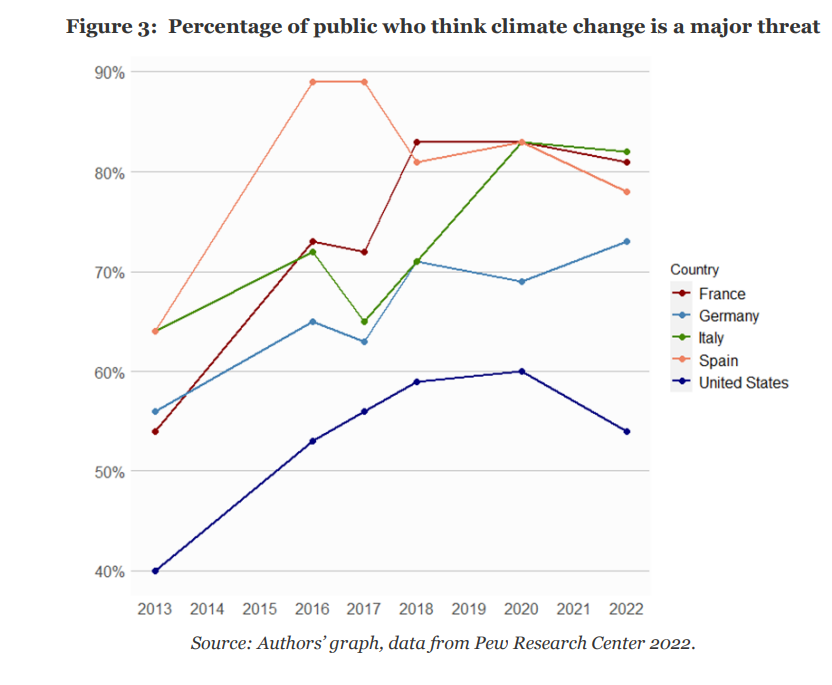
The current divergence is unlikely to disappear soon, as the forces of divergence are deeply rooted in domestic climate politics. At the same time, given the international interconnectedness of central banking, we expect global policy norms to provide sustained pressure toward convergence. In this context, the ECB could still scale back some of its proactive commitments (Van Doorslaer and Vermeiren 2022), although it is unlikely to entirely disavow its current stance. The Fed is likely to seek a more favorable compromise, such as assuring domestic audiences of policy restraint, while cooperating with international peers on less overt regulatory interventions.
Why the Fed and ECB Parted Ways on Climate Change: The Politics of Divergence in the Global Central Banking Community
Authors: Monica DiLeo, Glenn D. Rudebusch, Jens van ’t Klooster
From: University of Queensland, Australia, Brookings Institution & New York University, University of Amsterdam
